

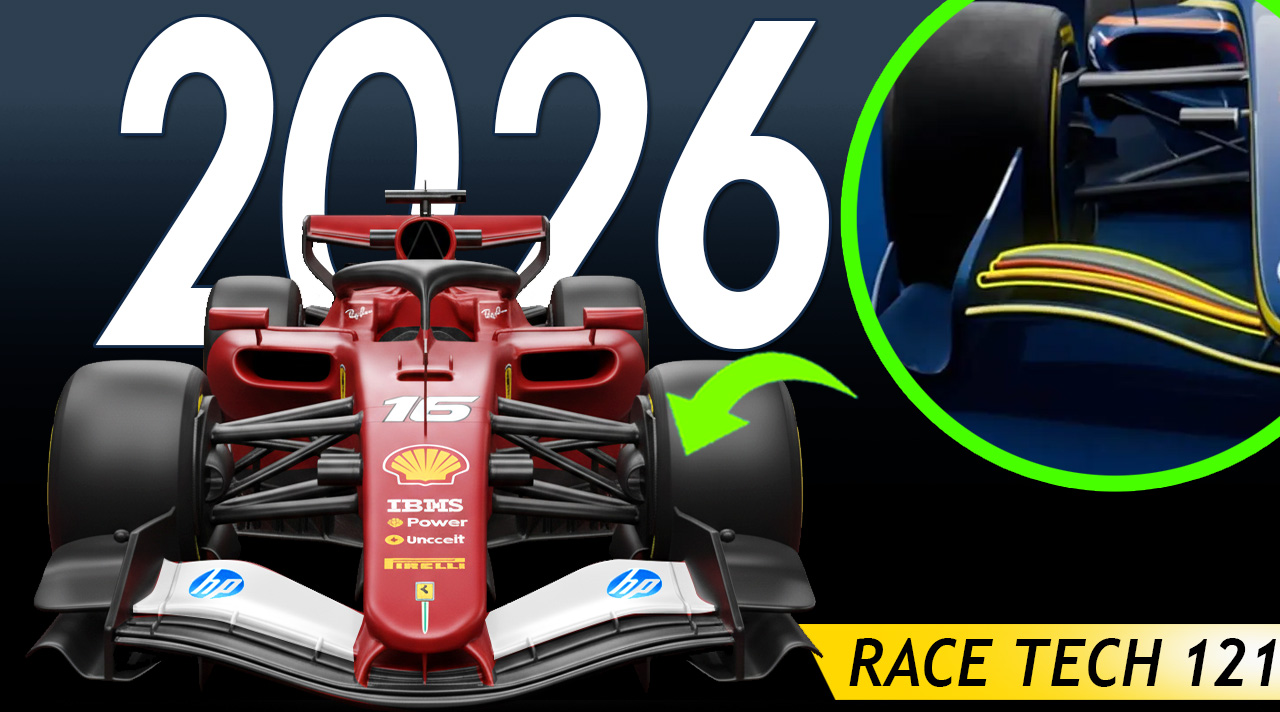
Guarda la versione completa su YouTube: NEWSf1IT
An inside analysis from an F1 designer with experience since 2009: how movable wings, safety, and the future of overtaking will change in 2026.
Formula 1 regulations for 2026 promise to redefine the very concept of a single-seater, with radical changes extending beyond the power unit to focus on F1 2026 active aerodynamics. In a time of rampant speculation, NewsF1.it went straight to the source, speaking exclusively with engineer Alberto Maggioni,
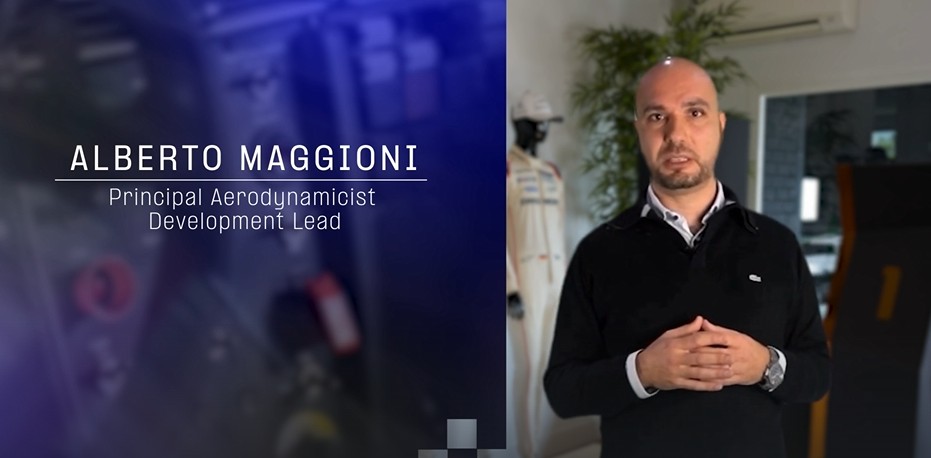
🎓 Engineer Alberto is also the founder of the RGB Motor Academy, and the creator of a comprehensive aerodynamics course — link https://www.rgbmotoracademy.com/p/aerodinamica1
a prominent figure in Formula 1 aerodynamics. With extensive experience in designing single-seaters since 2009 (starting with the Toyota era) and currently part of the Sauber Audi group, Maggioni offers us a clear and concrete vision.
His direct and engineering perspective cuts through rumors, providing crucial details on the safety of future movable wings and the real motivations driving the FIA’s revolution in F1 2026 active aerodynamics.
The Core of the Change: New Movable Wings and Their Function for F1 2026 Active Aerodynamics (0:57 in the video)
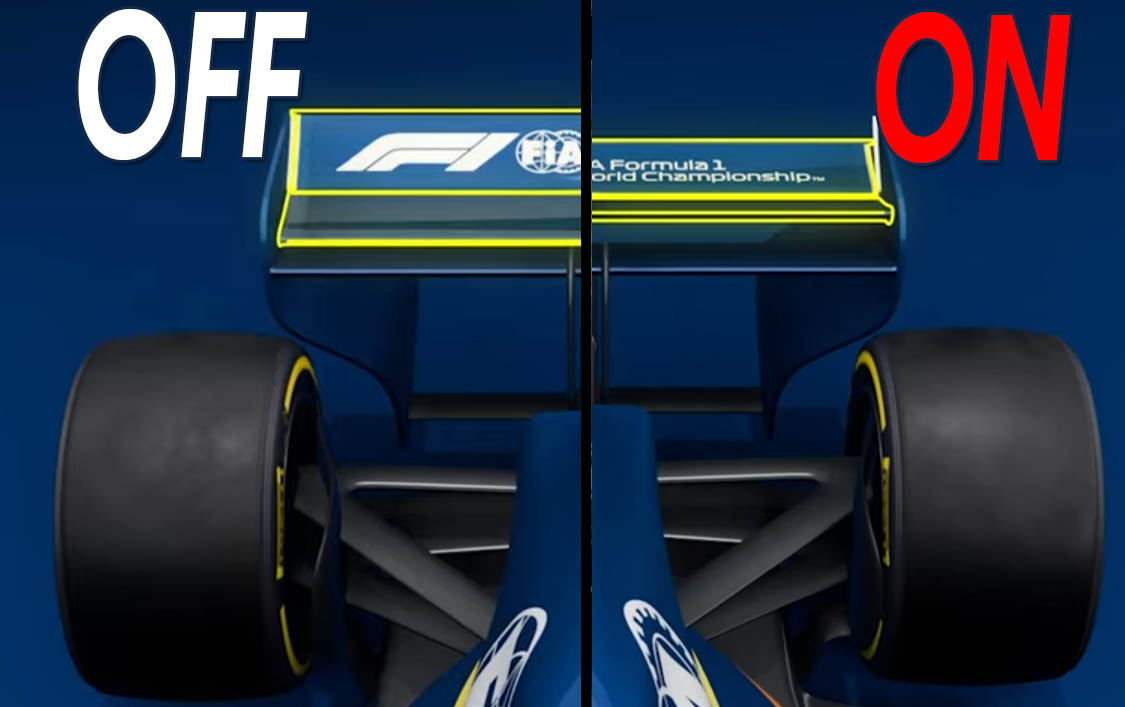
The 2026 regulations will introduce movable wings both front and rear, an innovation designed to balance performance. As Engineer Maggioni explains, the goal is to compensate for slower cars in corners – due to an overall reduction in downforce – with higher speeds on the straights. “The idea is to compensate for less speed in corners with more on the straight,” Maggioni states, describing a system where the opening of movable flaps drastically reduces downforce and, consequently, aerodynamic drag, allowing the car to achieve higher speeds on the straight. This is the cornerstone of the new F1 2026 active aerodynamics.
Safety First: The Secret of the Anti-Failure Mechanism (1:46 in the video)
While some question the safety of such a dynamic and complex F1 2026 active aerodynamics system, Engineer Maggioni reveals a fundamental aspect, often overlooked in external discussions. The FIA has imposed strict safety protocols: “In case of a hydraulic system failure that opens the flap, it must mechanically return to its original position under load,” Maggioni explains. This means that, even in the event of a malfunction, the wing will automatically revert to the high-downforce position, ensuring stability and control for the car. This mechanical “fail-safe” principle protects drivers and the integrity of the competition – a detail only an experienced F1 aerodynamics designer can provide with such clarity.
Beyond DRS: The “Boost” for Overtaking and the Evolution of F1 2026 Active Aerodynamics Regulations
The true motivation behind this F1 2026 active aerodynamics revolution, as highlighted by Maggioni, is to increase excitement and overtaking opportunities. In recent years, despite efforts, races have still shown difficulty in finding the right moment to overtake, as demonstrated by recent incidents (e.g., Singapore GP). “Certainly, a simplification of the single car’s aerodynamics… plus the introduction of the two DRS systems… should increase the chances of getting closer on the straight and being able to attempt an overtake,” states the engineer, an expert in active aerodynamics.
Updates on the Latest Rumors: Electronic Actuators and “Overtake” Mode in F1 2026 Active Aerodynamics
It is crucial to note how FIA regulations are constantly evolving. Although Engineer Maggioni, in our conversation a couple of months ago, focused on the fundamental principles of the hydraulic system and mechanical safety, recent leaks and clarifications indicate a further evolution for F1 2026 active aerodynamics:
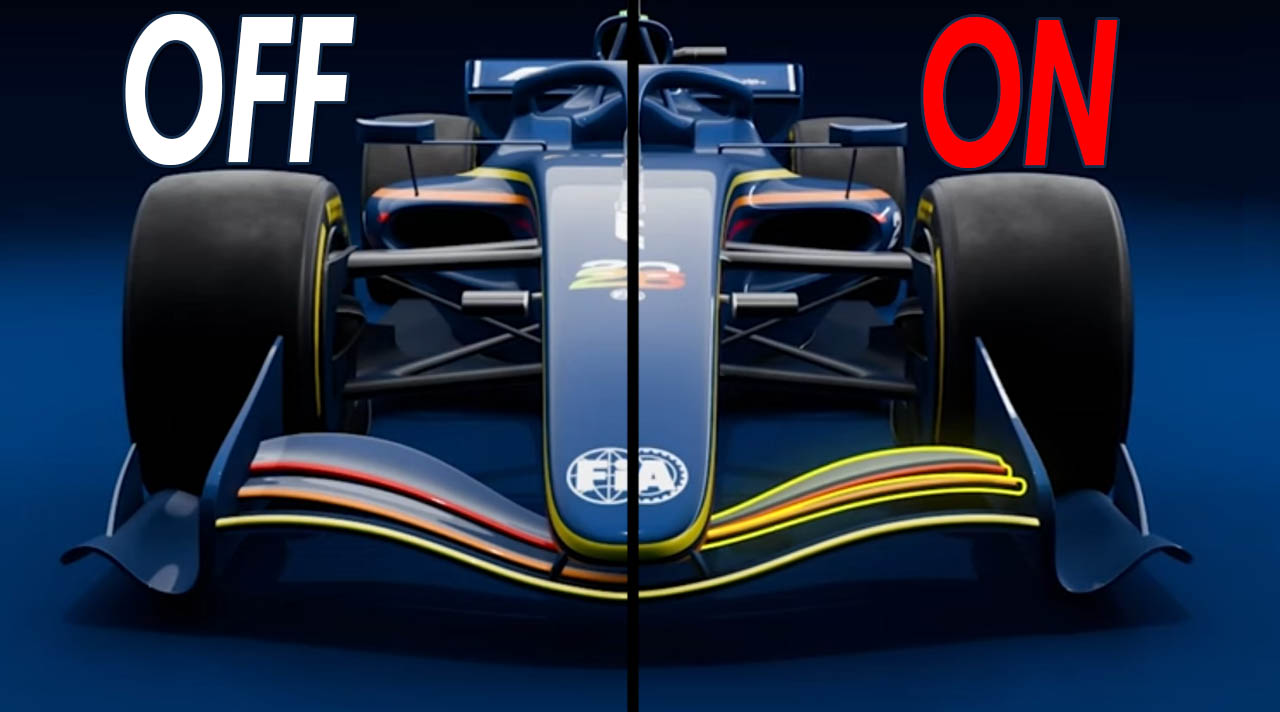
- Electronic Actuators: It is increasingly likely that the actuators moving the wings will be electronically controlled, or “drive-by-wire,” to ensure greater precision, faster response, and better integration with other car systems. This represents a technological leap from traditional hydraulic systems, a key innovation for F1 2026 active aerodynamics.
- The “Overtake Button” or MOM (Manual Override Mode): This will no longer be a simple DRS activated based on distance. The latest indications point to a temporary “boost” activatable by the driver – a true “Overtake Button” – which will allow access to a very low-drag configuration for a straight-line advantage. This aligns perfectly with the FIA’s goal of offering more overtaking opportunities, giving the driver more active control over the “moment” of the attempt in the new era of F1 2026 active aerodynamics.
These developments, while refining technical details, do not contradict the safety foundations and primary objectives outlined by Engineer Maggioni. On the contrary, they confirm the validity of his principles, showing how technology is adapting to realize the FIA’s vision in an increasingly sophisticated manner. His long experience in Formula 1 provides an invaluable perspective on these dynamics.
Conclusion:
2026 will be a milestone year for Formula 1 and for F1 2026 active aerodynamics. Engineer Alberto Maggioni, with his profound internal knowledge and an F1 career rooted in 2009, has offered us a unique and authoritative perspective on the challenges and opportunities of these changes. His contribution is essential to understanding not just “what” will change, but crucially “how” and “why,” distinguishing engineering reality from mere speculation. We will continue to closely follow the developments of F1 2026 active aerodynamics, always aiming to provide you with precise, first-hand analysis.