

McLaren and Mercedes have followed seemingly opposite aerodynamic development paths during the 2026 Formula 1 season. However, their latest updates suggest that the two teams may be moving towards increasingly similar solutions. According to engineer Riccardo Romanelli, the explanation lies in the complex search for the ideal aerodynamic balance.
McLaren and Mercedes have approached the 2026 Formula 1 regulations with different aerodynamic philosophies. Throughout the season, both teams have introduced significant changes to their cars, particularly around the sidepods and front wing.
Interestingly, some of their latest developments appear to be moving in opposite directions from their original design concepts. Solutions initially associated with one team are now becoming increasingly similar to ideas explored by its rival.
This is one of the most interesting aspects of the current technical development race. As explained by engineer Riccardo Romanelli during episode 174 of Race Tech, the two teams may be following different paths towards a similar aerodynamic objective.
The key is not simply generating more downforce, but finding the right balance between aerodynamic load, vehicle stability and sensitivity to ride-height variations.
McLaren and Mercedes: Two Different Aerodynamic Philosophies
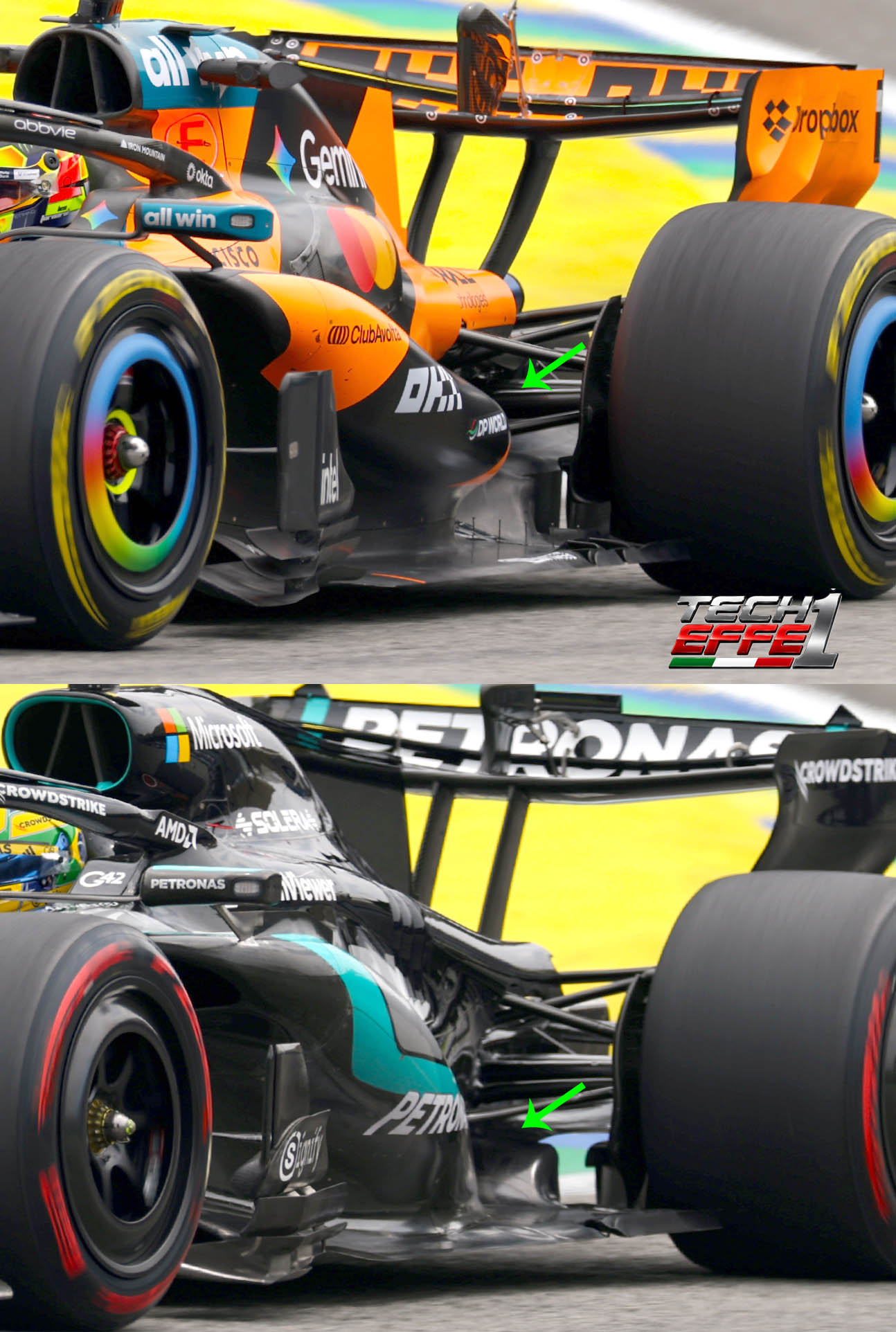
Throughout the 2026 season, McLaren and Mercedes have demonstrated different approaches to aerodynamic development.
McLaren has worked on its sidepod concept in one direction, while Mercedes has progressively introduced solutions that resemble design ideas previously explored by the Woking-based team.
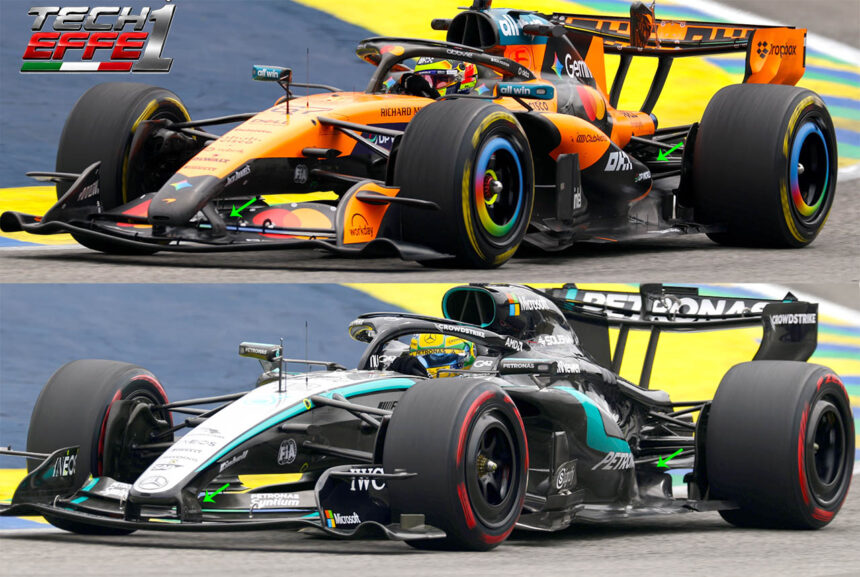
The differences are not limited to bodywork. The front wings also reveal an interesting evolution when comparing their original configurations with the latest versions.
Romanelli highlights the geometry of the front-wing elements, particularly the third element. Looking at the chord distribution from the central section towards the outer end of the wing, differences emerge between the earlier and updated configurations.
These changes provide an insight into how both teams have progressively modified their initial aerodynamic concepts.
Rather than following a single development philosophy, McLaren and Mercedes appear to have explored different solutions before moving towards configurations that share some characteristics.
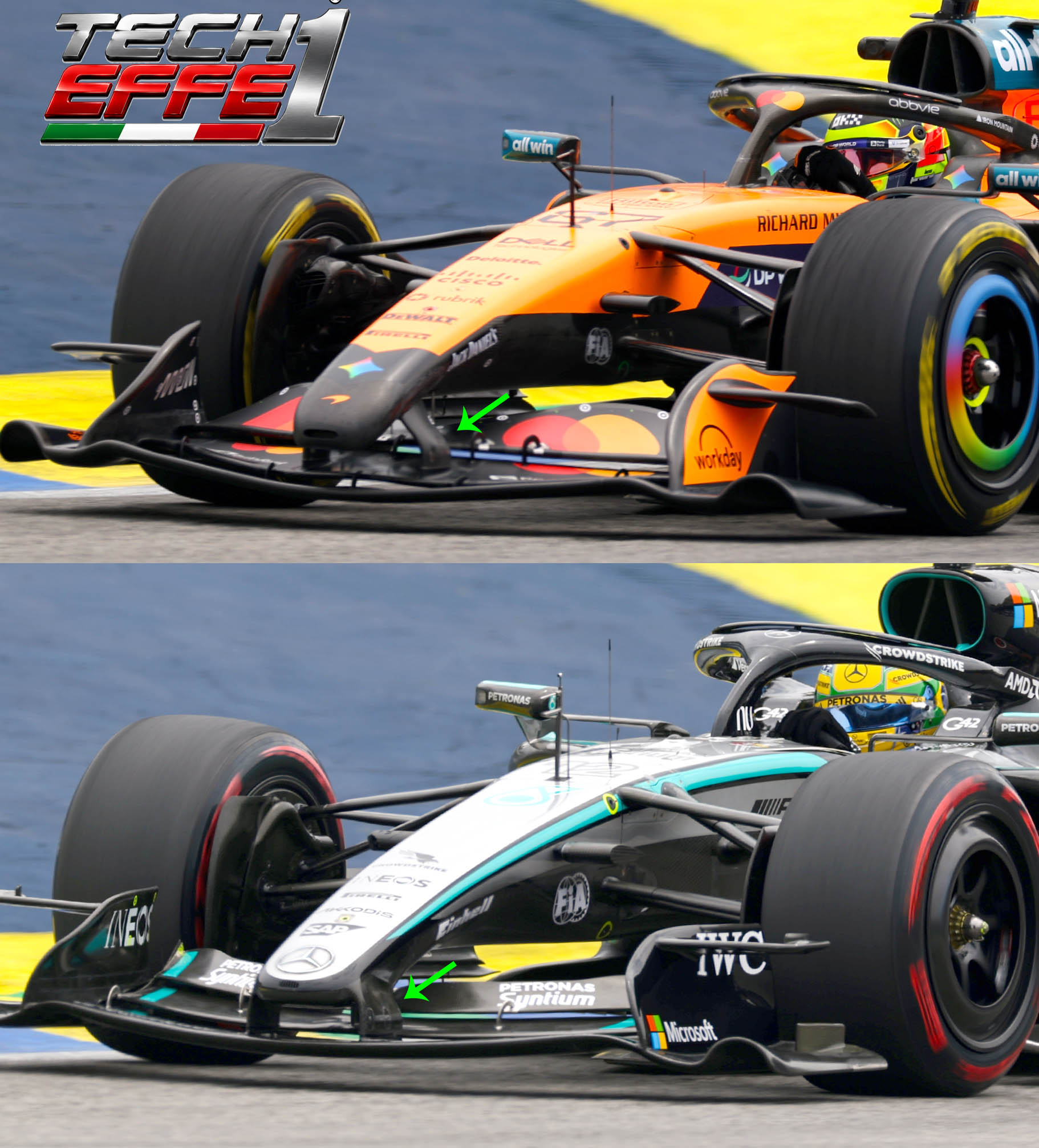
Front Wing Development: Comparing McLaren and Mercedes
The front wing is one of the most important aerodynamic components of a modern Formula 1 car.
Changes to its profile geometry cannot simply be viewed as attempts to increase downforce. Every modification affects the overall aerodynamic behaviour of the car and, crucially, the way airflow is directed towards downstream components.
Romanelli’s analysis highlights how McLaren and Mercedes have progressively modified their front-wing designs, moving away from some of their original solutions.
The particularly interesting aspect is that certain development directions appear to be crossing.
One team is moving towards concepts that its rival had already explored, while the other is progressively adopting different configurations.
This does not necessarily mean that one solution is superior. Instead, it illustrates how difficult it is to identify the best aerodynamic compromise under the new 2026 technical regulations.
Why Could McLaren and Mercedes Be Converging Towards Similar Solutions?
One of the most interesting points in Romanelli’s analysis concerns the concept of a local performance maximum.
Every Formula 1 car has its own aerodynamic map, determined by the geometry of the chassis and the interaction between its different aerodynamic components.
The objective is to achieve an effective balance between several parameters:
- Overall aerodynamic downforce.
- Front-to-rear aerodynamic balance.
- Sensitivity to changes in ride height.
- Consistency across different operating conditions.
Simply generating the maximum possible downforce in one specific configuration is not enough. A competitive car must also maintain predictable aerodynamic behaviour when its operating conditions change.
According to Romanelli’s interpretation, McLaren and Mercedes may have started from two different aerodynamic configurations, each with its own local performance optimum.
As development progressed, both teams continued searching for improved performance, potentially moving in different directions from their original design concepts.
This could explain why some of their latest aerodynamic solutions are becoming increasingly similar, despite the different philosophies behind their initial designs.
The Real Objective: Finding the Right Aerodynamic Balance
An aerodynamic development programme is not simply about maximising downforce.
One of the biggest challenges is maintaining a stable aerodynamic balance as ride height changes, both at the front and rear of the car.
The car must also perform effectively across different aerodynamic configurations, from low-downforce settings to medium-downforce setups required at circuits with different characteristics.
These parameters play a fundamental role in determining the overall quality of an aerodynamic package.
A car may have excellent theoretical potential but still be difficult to drive if its aerodynamic balance changes too dramatically under different operating conditions.
For this reason, Romanelli stresses that engineers must look beyond overall downforce and aerodynamic efficiency.
Several other variables contribute to performance, and optimising them requires extensive development work.
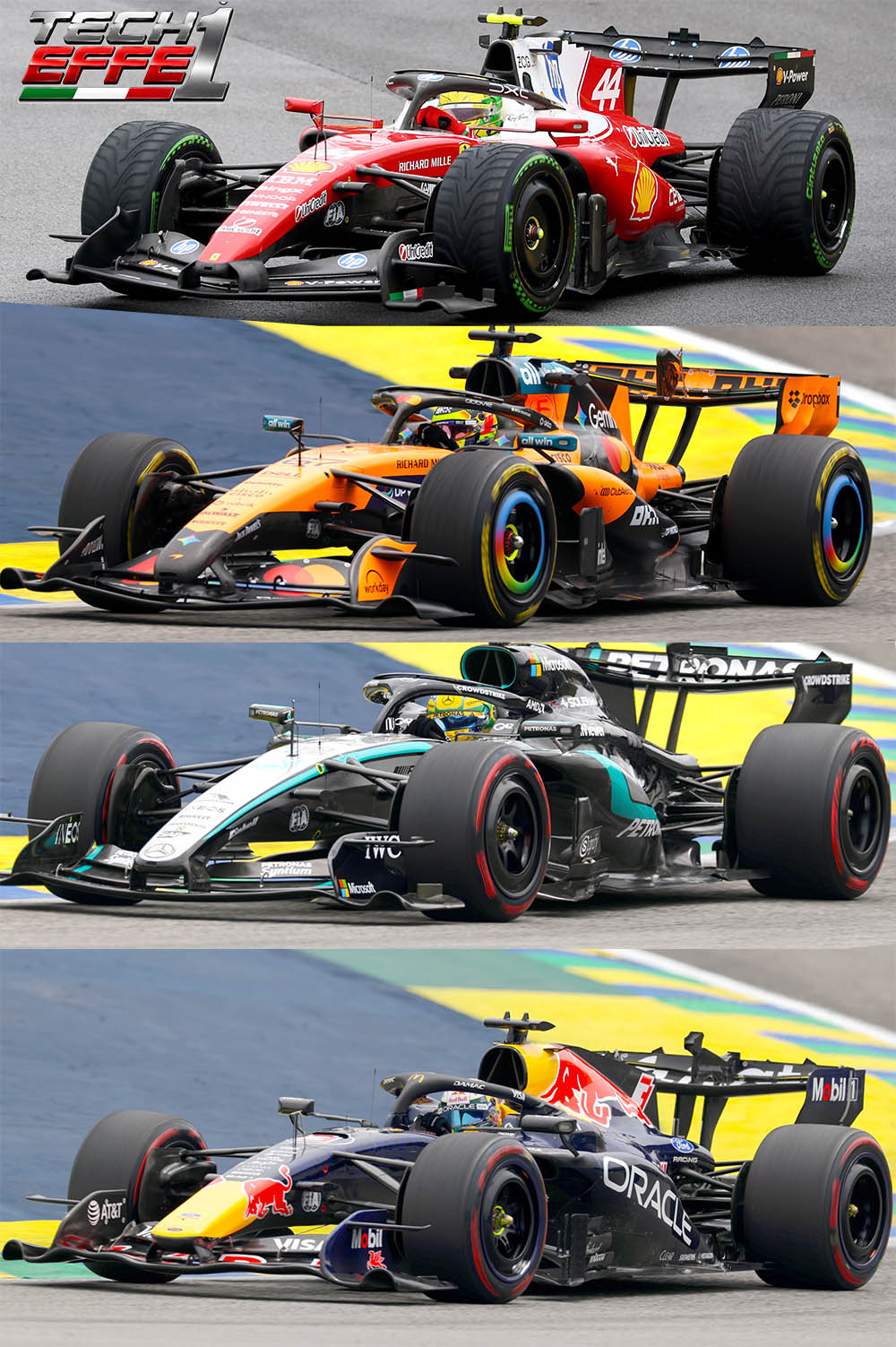
Formula 1 2026: Aerodynamic Development Is Far From Over
The most significant conclusion from this analysis is that, even though teams have now gained considerable experience with the 2026 regulations, there is still substantial room for aerodynamic development.
The current season demonstrates just how difficult it is to identify the best technical solution from the outset.
Even leading teams such as McLaren and Mercedes continue to investigate different configurations and progressively refine their cars.
The possible convergence between their aerodynamic philosophies is therefore an interesting indicator of how Formula 1 engineering is evolving.
It is still too early to establish whether a definitive aerodynamic concept will eventually emerge, or whether different teams will continue to pursue fundamentally different solutions.
However, Romanelli’s analysis highlights an important principle: performance does not depend solely on the original design philosophy chosen by a team’s engineers. It also depends on their ability to understand, measure and optimise every parameter of the car.
McLaren and Mercedes started from different directions, but their development programmes may now be bringing them closer together.
And this continuous search for the ideal aerodynamic balance is one of the most fascinating aspects of the 2026 Formula 1 technical revolution.
Technical analysis: Riccardo Romanelli – Race Tech, Episode 174.
Original Italian article: McLaren e Mercedes, sviluppi aerodinamici opposti: le due F1 stanno convergendo?
Original reporting: Vito Defonseca – NewsF1.it.