

Guarda la versione completa su YouTube: NEWSf1IT
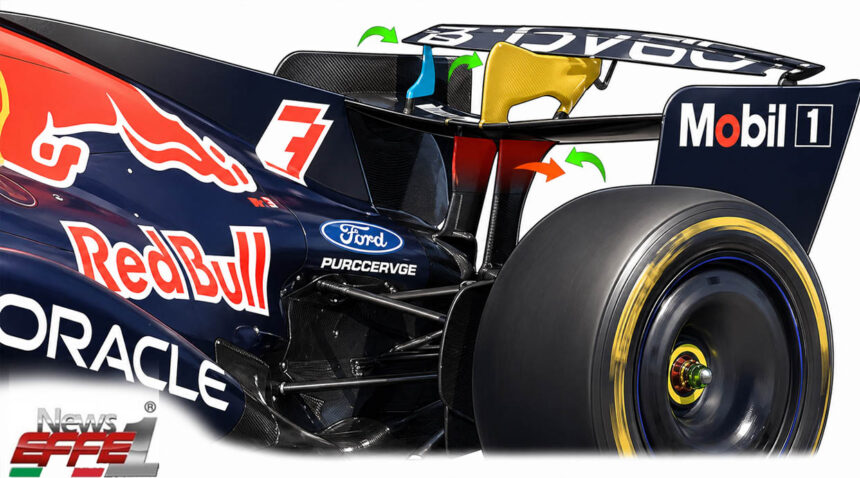
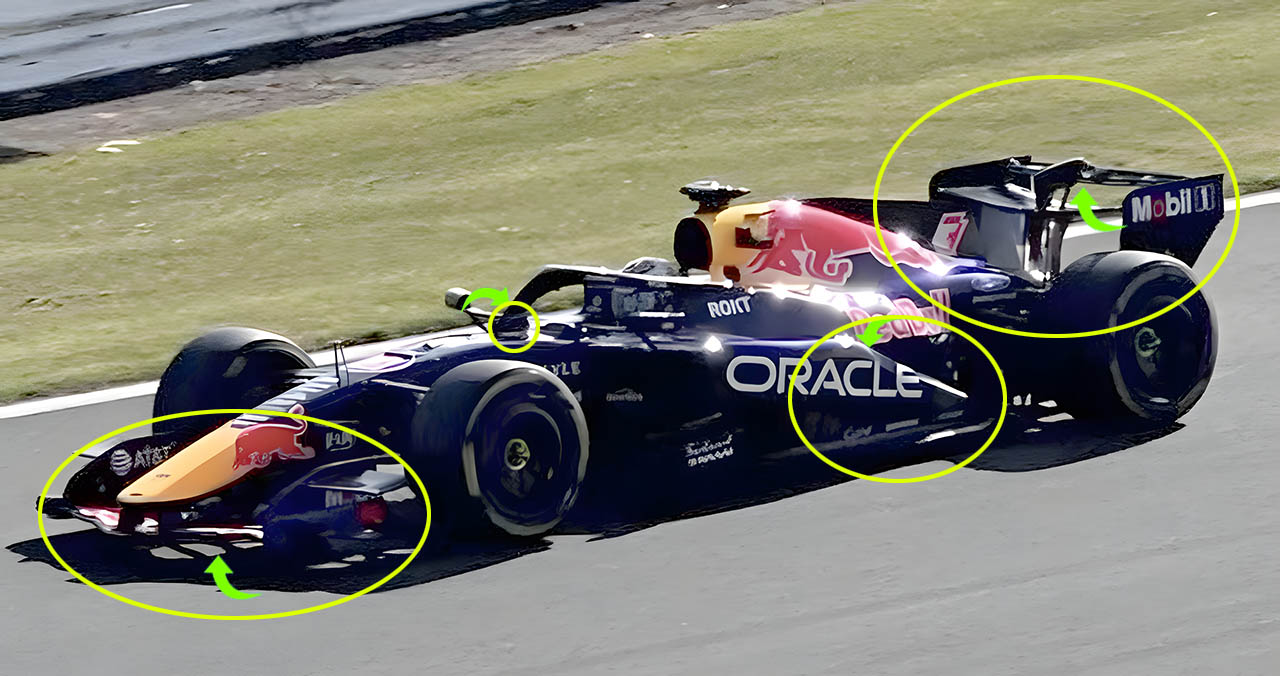
For the 2026 F1 season, Red Bull has introduced its own interpretation of the “Macarena” rear wing, taking the concept first seen on Ferrari to a more aggressive level. At the same time, the team has made radical changes to the sidepods in an effort to improve aerodynamic stability and overall drivability, addressing issues highlighted by Max Verstappen.
- Red Bull interprets the “Macarena”: evolution or technical statement?
- A more extreme wing: geometry and philosophy
- Tip vortices: limitation or opportunity?
- Miami as a test ground?
- New sidepods: a key intervention
- Aerodynamics and drivability: a closer link than it seems
- The aerodynamic platform problem
- A more aggressive Red Bull approach
- Final Analysis
- Source
Red Bull interprets the “Macarena”: evolution or technical statement?
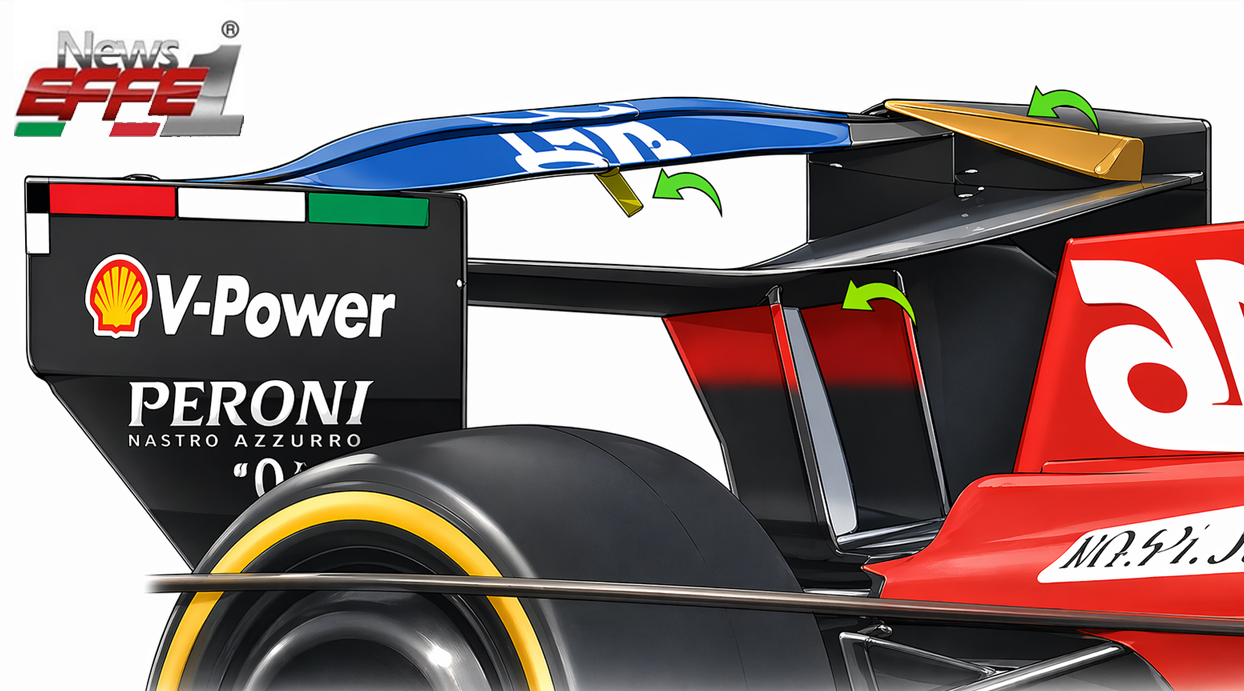
After observing Ferrari’s solution during testing, Red Bull quickly developed its own version of the “Macarena” rear wing. This sends a clear message: the concept was not dismissed, but considered promising enough to justify an accelerated development program.
Within Formula 1 teams, dedicated groups analyze competitors’ innovations. Red Bull’s rapid response suggests that the balance between aerodynamic gains and technical complexity was judged to be positive.
A more extreme wing: geometry and philosophy
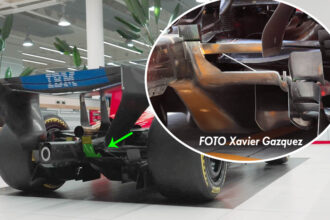
However, Red Bull’s solution follows a different approach compared to Ferrari. The actuation system remains centralized, maintaining a more traditional philosophy instead of integrating actuators into the endplates as Ferrari did.
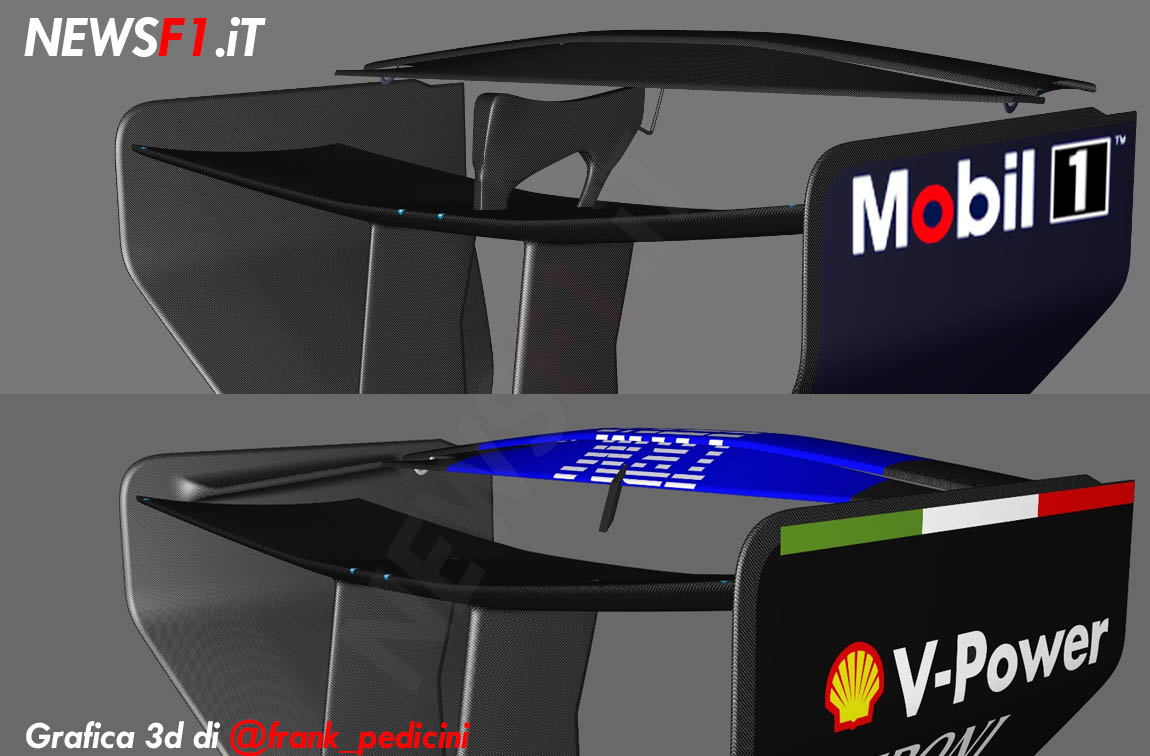
The most noticeable feature is the extreme “stagger” between the mainplane and the flap. The profiles appear strongly separated vertically, with sections operating almost outside the shielding of the endplates. This introduces a crucial aerodynamic challenge.
Tip vortices: limitation or opportunity?
Such a configuration exposes the wing tips more directly to the formation of vortices, potentially increasing induced drag. Normally, the lack of lateral shielding reduces aerodynamic efficiency.
However, there is an alternative interpretation. Greater separation between the elements reduces aerodynamic interference, allowing finer control of the flap’s angle of attack. If the flap operates close to a neutral aerodynamic condition, downforce generation decreases, along with the impact of tip vortices.
In this scenario, the “micro-wing” created by the flap could operate in a highly efficient window, reducing drag without compromising overall balance.
Miami as a test ground?
It remains unclear whether this configuration will be used in a race. A debut in Miami would be a strong signal, but it could still be an experimental solution tested during a filming day.
If Red Bull decides to race it, the message would be clear: Ferrari’s concept is not only valid, but can be pushed even further.
New sidepods: a key intervention
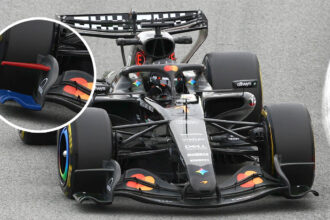
At the same time, Red Bull has introduced significant modifications to the sidepods, especially in the rear section. This is far from a cosmetic change, as sidepod shape plays a crucial role in managing airflow towards the rear of the car.
The goal is to optimize diffuser feeding and improve airflow quality around the rear wheels—two key factors for generating efficient aerodynamic downforce.
Aerodynamics and drivability: a closer link than it seems
The issues reported by Max Verstappen appear to be related mainly to vehicle dynamics, but this does not exclude an aerodynamic root cause.
An unstable aerodynamic map—meaning variations in front-to-rear balance with speed and ride height—can significantly affect drivability. The result is an unpredictable car during load transfers, particularly in corner entry and traction phases.
The sidepod modifications may therefore aim to stabilize aerodynamic behavior across the entire operating window of the car.
The aerodynamic platform problem
In dynamic conditions, the car behaves like an elastic system: aerodynamic load changes with speed, affecting ride height and, in turn, floor and diffuser efficiency.
If this interaction is not properly controlled, unwanted shifts in the center of pressure occur, directly impacting stability. Modifying the sidepods helps manage this balance, making airflow more consistent and predictable.
A more aggressive Red Bull approach
Historically, Red Bull has never shied away from aggressive technical solutions. The extreme rear wing and redesigned sidepods confirm this philosophy.
The picture that emerges is of a team that has identified a real problem and is addressing it decisively, even at the cost of introducing complex and not yet fully validated solutions.
Final Analysis
Red Bull has not simply copied Ferrari but has reinterpreted the “Macarena” wing concept, pushing it towards a more extreme configuration that could be more efficient under specific conditions.
At the same time, the work on the sidepods suggests a structural attempt to correct aerodynamic instabilities that directly affect drivability.
If these changes prove effective, they could represent a turning point in the development race. However, significant uncertainties remain regarding the correlation between simulation data and on-track performance.
Source
To stay updated with the latest news, technical analysis, and insights on Formula 1, visit https://www.newsf1.it/category/f1-news-english/ and subscribe to our YouTube channel .