

Guarda la versione completa su YouTube: NEWSf1IT
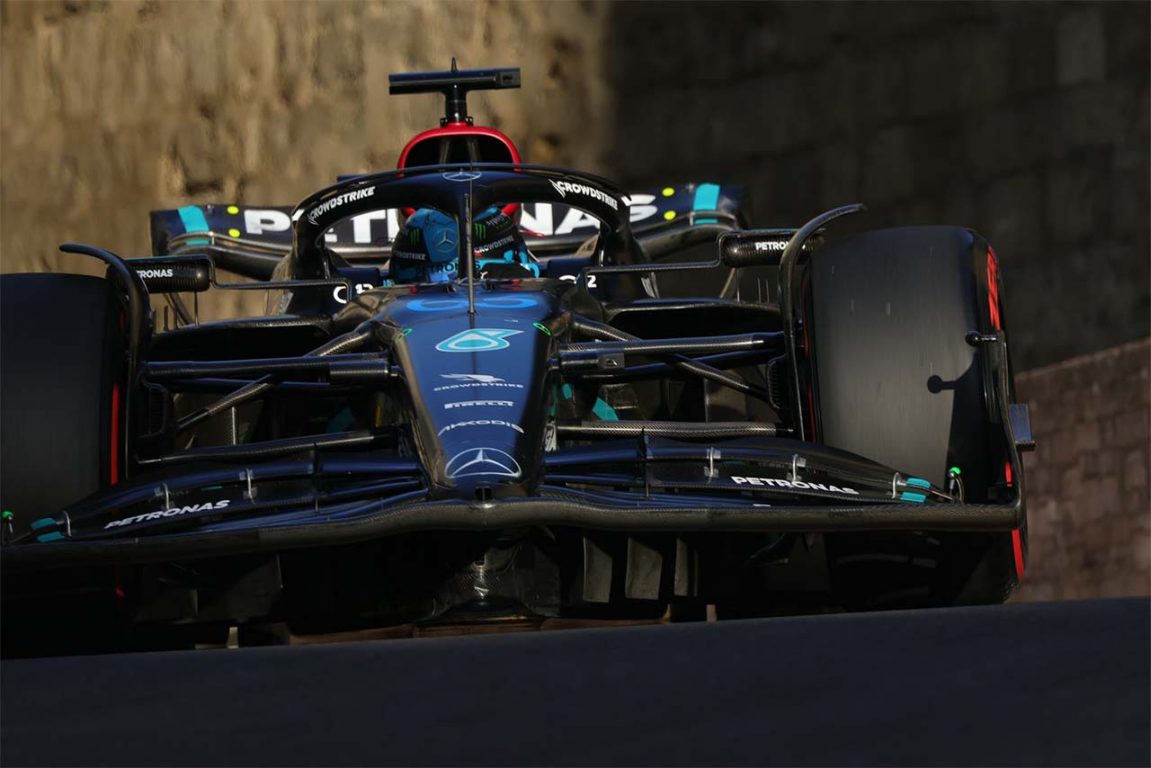
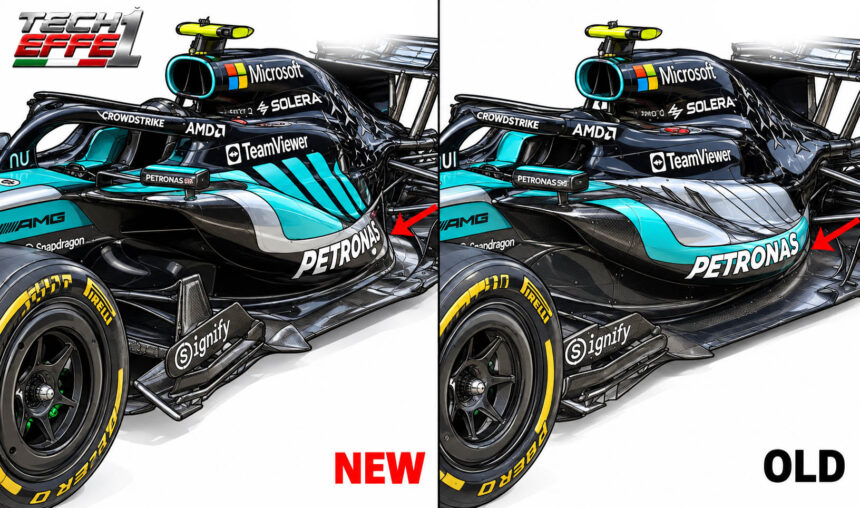
Mercedes is continuing to explore aerodynamic developments for its 2026 Formula 1 car, with particular attention to the shape of the sidepods and the way airflow is guided towards the rear of the car.
- How Mercedes’ revised sidepods work
- Why airflow management matters around the diffuser
- More downforce does not always mean a faster Formula 1 car
- Why the sidepods and rear wing must work together
- Can a circuit change the effectiveness of an aerodynamic update?
- Mercedes F1 2026: the importance of the complete aerodynamic package
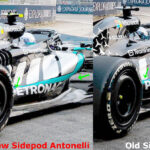
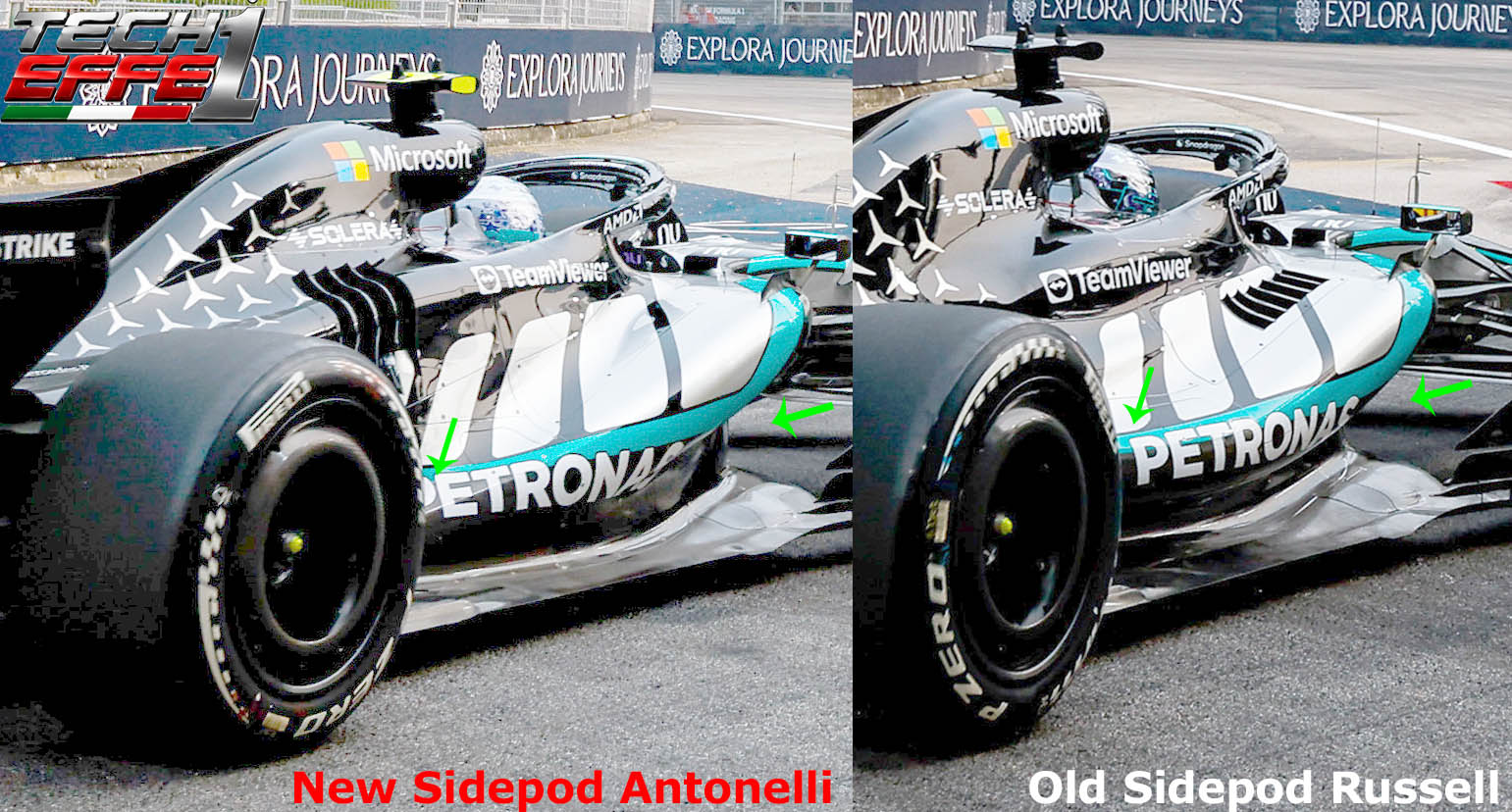
In the technical analysis presented by aerospace engineer Alberto Aimar on Formula 1 Garage, one of the most interesting details is a revised rear section of the sidepods. The bodywork appears more tapered towards the back, with a more pronounced downward slope intended to influence the airflow around the diffuser area.
The key question is not simply whether the new shape generates more aerodynamic load. It is how the change affects the interaction between the sidepods, the floor, the diffuser and the overall aerodynamic balance of the car.
How Mercedes’ revised sidepods work
The solution discussed by Aimar focuses on slimming down the rear section of the sidepods and shaping the upper bodywork to guide airflow towards the rear of the car.
This approach recalls aerodynamic concepts explored by Formula 1 teams under previous regulations, when bodywork geometry played an important role in directing air towards the diffuser and the area ahead of the rear wheels.
The diffuser helps manage the expansion of airflow exiting from beneath the car. Its geometry contributes to the pressure distribution under the floor and therefore to the generation of aerodynamic downforce.
The airflow around the rear bodywork also matters. The way air is guided towards and around the diffuser region can influence the performance of the overall aerodynamic package.
However, the visible shape alone does not reveal the actual aerodynamic gain. Without wind-tunnel measurements, computational fluid dynamics data or on-track comparisons, it is not possible to quantify the benefit of the revised sidepods.
Why airflow management matters around the diffuser
The diffuser cannot be considered an isolated component. Its behaviour is influenced by the airflow arriving from the floor, the surrounding bodywork and the region ahead of the rear wheels.
Mercedes’ revised sidepod geometry is intended to influence this broader flow structure. The objective, as discussed in Aimar’s analysis, is to direct air towards the rear diffuser area and make better use of the available aerodynamic surfaces.
The important distinction is between the intended effect and a proven result. The geometry suggests a specific aerodynamic objective, but only further testing and performance data can establish whether the solution delivers the expected improvement.
This is a central principle of Formula 1 aerodynamics: a component must work as part of the complete car rather than simply appear more efficient when viewed on its own.
More downforce does not always mean a faster Formula 1 car
One of the most important points in Aimar’s analysis is the relationship between aerodynamic performance and vehicle dynamics.
A change designed to increase rear downforce can also alter the balance between the front and rear axles. If the distribution of aerodynamic loads becomes less suitable for the car’s handling characteristics, the result may be a less effective overall package.
For example, an excessive increase in rear aerodynamic load relative to the front could contribute to understeer. The front tyres may then struggle to generate enough lateral force to make the car follow the intended line through a corner.
This does not mean that additional rear downforce is inherently undesirable. The outcome depends on the balance of the entire car, the operating conditions and the interaction between aerodynamic forces and mechanical behaviour.
In a Formula 1 car, aerodynamic loads can become comparable to or greater than the car’s own weight at speed. This makes aerodynamic balance a fundamental part of vehicle dynamics.
Why the sidepods and rear wing must work together
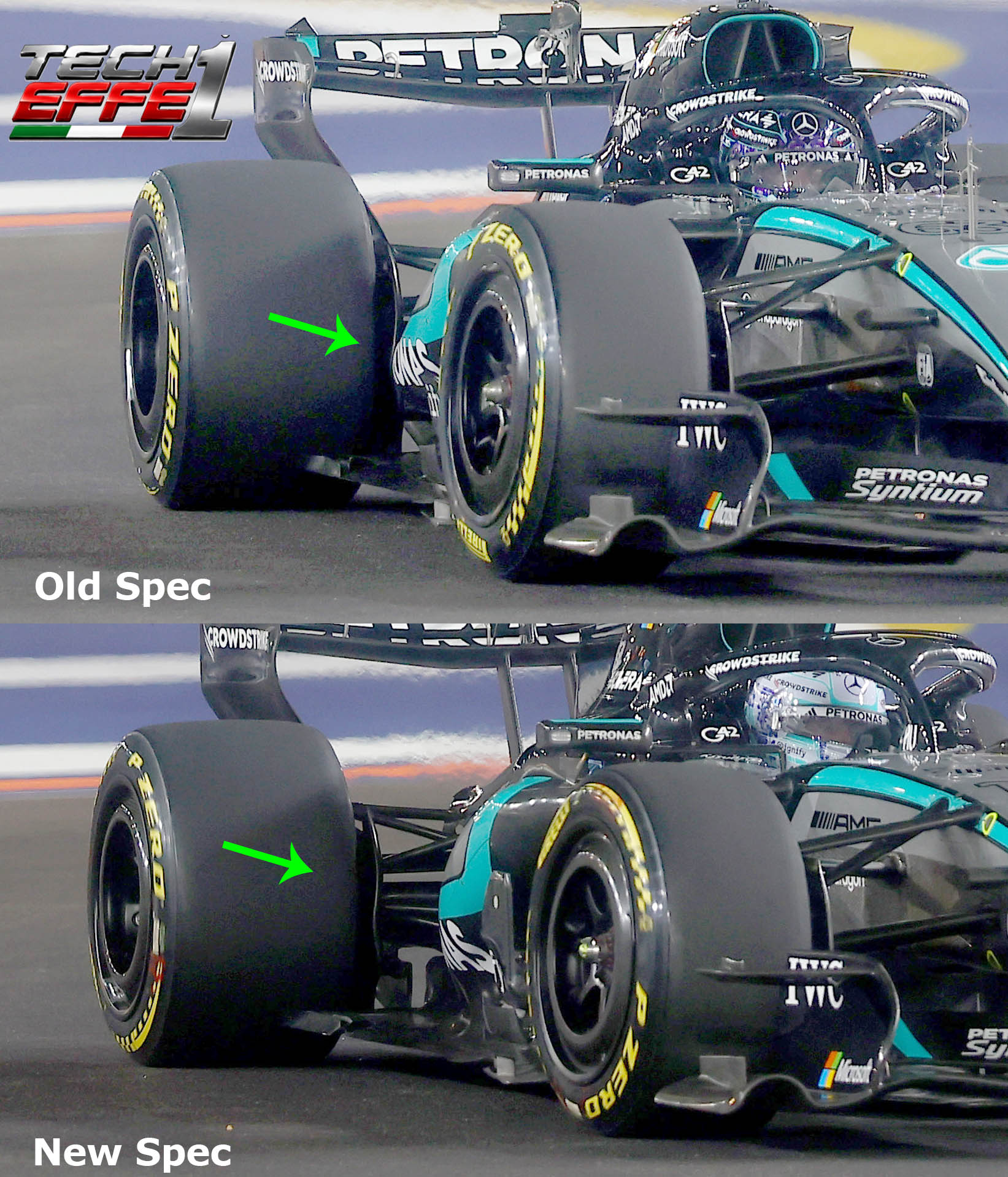
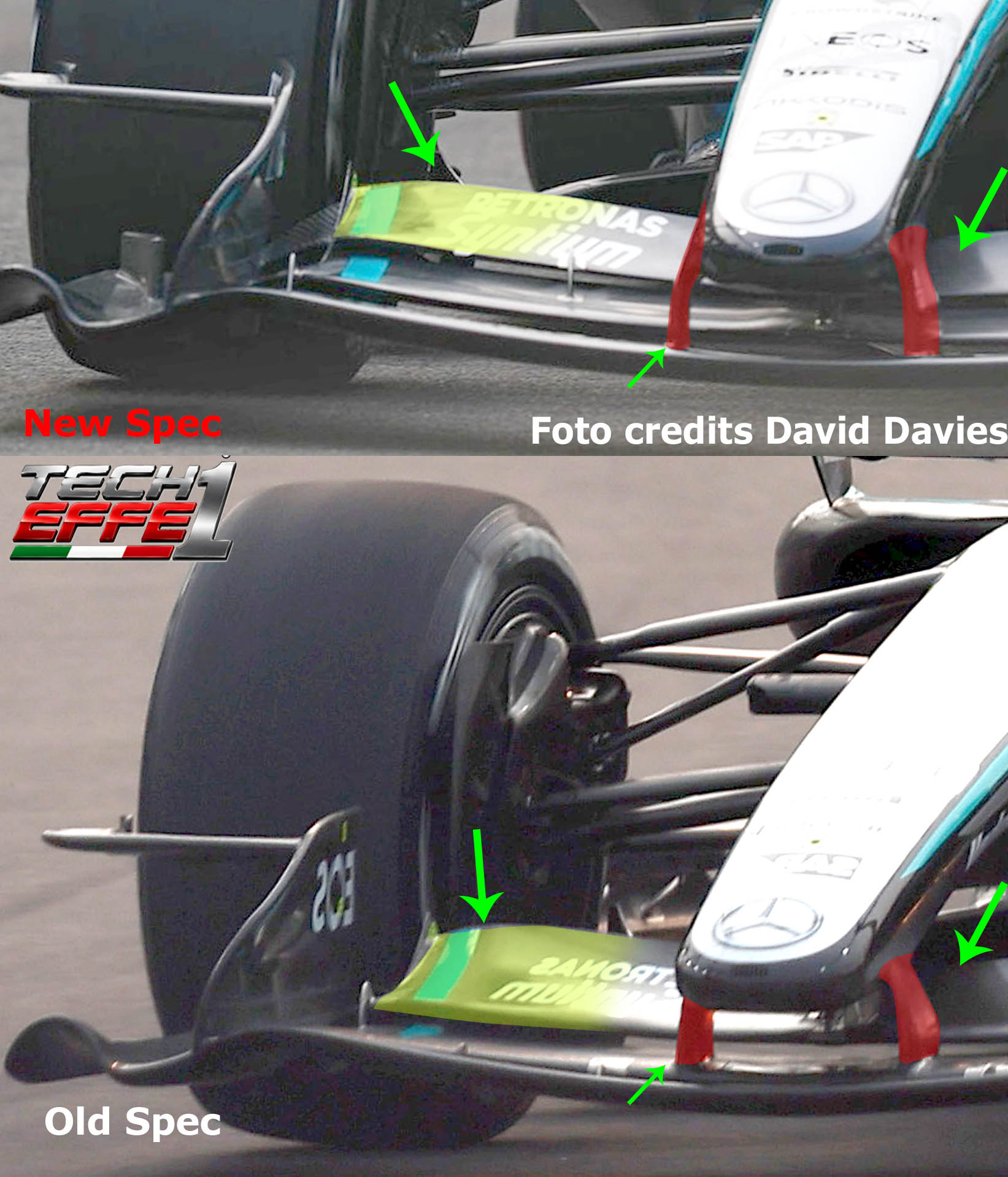
Mercedes has also been evaluating changes in other aerodynamic areas, including the rear wing. Aimar highlights an important consequence: changing the sidepods while also modifying the rear wing can affect the car’s overall aerodynamic balance.
These components influence different parts of the airflow, but their effects must ultimately work together. A gain in one area does not automatically translate into a faster car if it creates an undesirable balance elsewhere.
According to the analysis, the sidepod concept had already been tested with George Russell before being evaluated again with Kimi Antonelli.
That sequence suggests Mercedes was continuing to investigate the solution. It does not, by itself, establish whether the update was definitively successful or unsuccessful.
The key question is how the revised bodywork performs when combined with the rest of the aerodynamic package.
Can a circuit change the effectiveness of an aerodynamic update?
Circuit characteristics can influence how a Formula 1 aerodynamic package performs.
In his analysis, Aimar points out that Singapore’s slow corners may make it difficult to assess the full potential of certain aerodynamic developments. A solution that works well in one operating range may not deliver the same benefit under different conditions.
Cornering speeds, straight-line performance and the balance of the car all affect how an aerodynamic package is used.
For this reason, the performance of a new sidepod concept should not be judged solely on the basis of a single circuit. Further evaluation across different conditions would be needed to establish its overall value.
Mercedes may also use the information gathered during testing to guide future development. However, the possibility of a longer-term development benefit remains an interpretation rather than a confirmed outcome.
Mercedes F1 2026: the importance of the complete aerodynamic package
The revised Mercedes sidepods illustrate the complexity of Formula 1 aerodynamic development. Their shape is intended to influence airflow towards the rear of the car, but their effectiveness depends on how they interact with the floor, diffuser and rear wing.
The central lesson from Alberto Aimar’s technical analysis is that aerodynamic development is not simply about generating more downforce. It is about producing the right distribution of aerodynamic loads while preserving the balance required for the car to perform effectively.
The real value of the revised sidepods can only be established by evaluating their behaviour as part of the complete car.
In Formula 1, aerodynamic performance is determined not by the shape of a single component, but by how the entire package works together.
Follow NewsF1.it for more Formula 1 technical analysis and engineering insights.