Guarda la versione completa su YouTube: NEWSf1IT
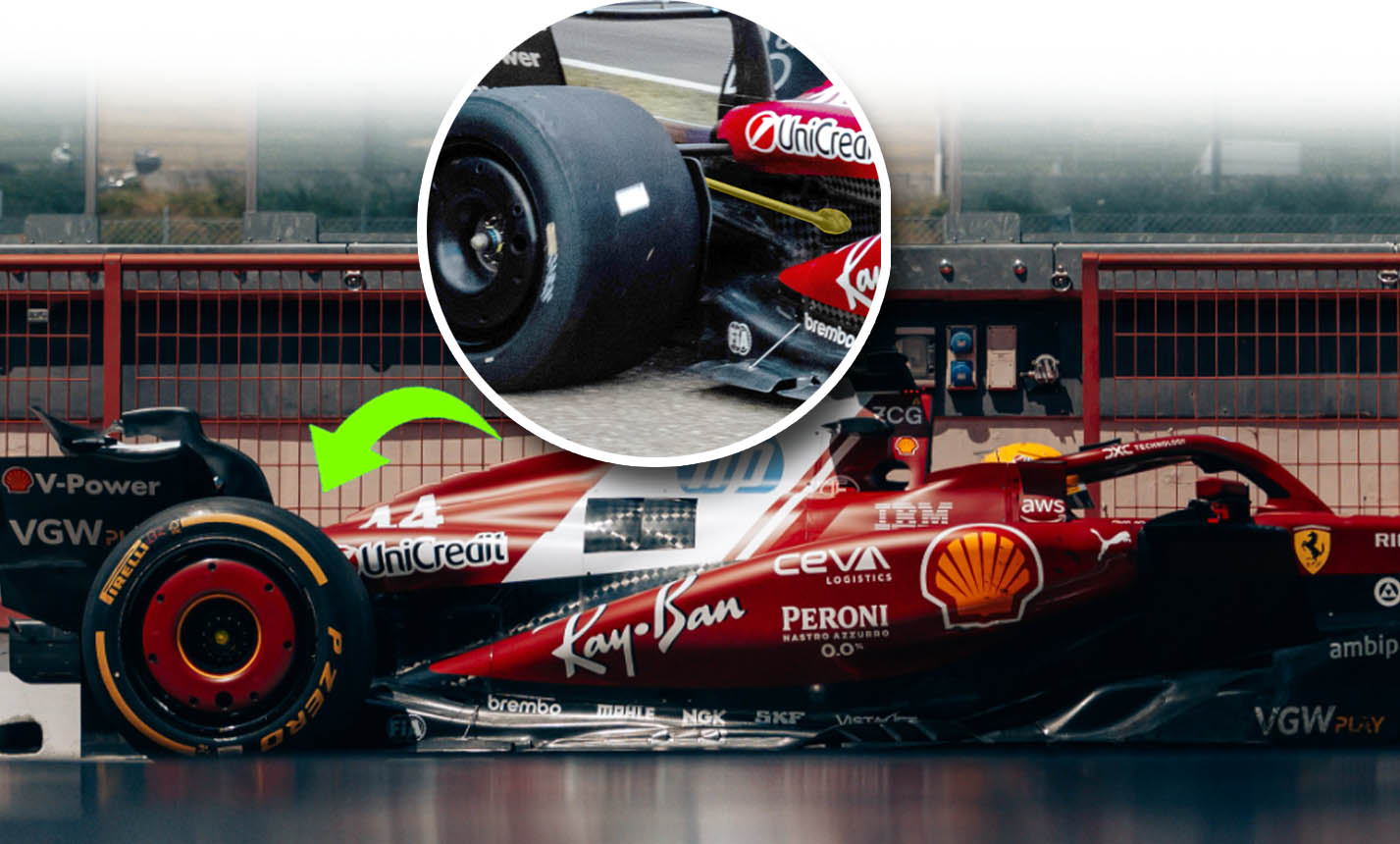
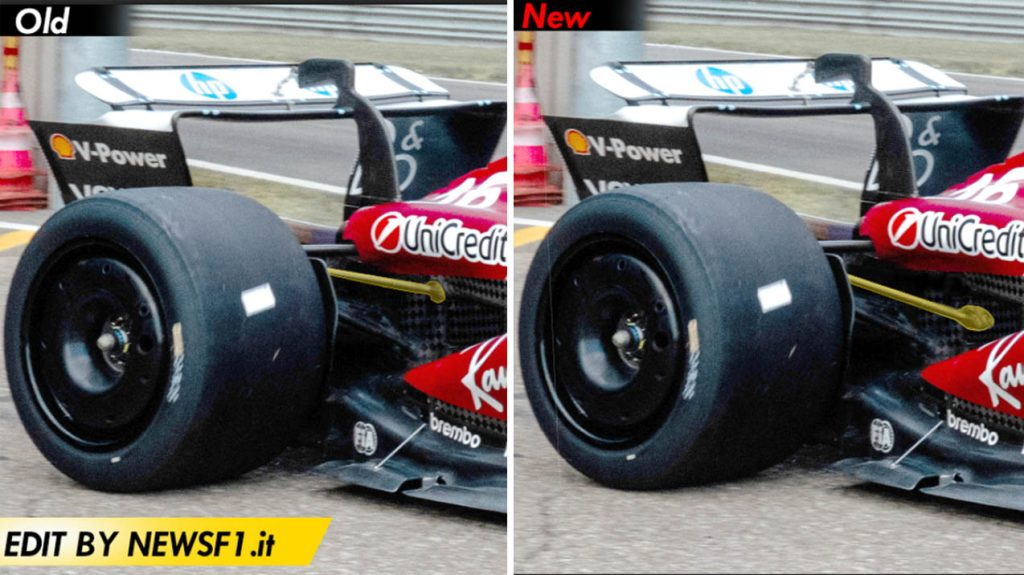
During the Mugello filming day, Ferrari ’s SF-25 drew attention by debuting a visible tweak to the rear suspension — specifically, a lowered front upper wishbone. While a minor change on the surface, it reveals a deeper shift in design philosophy aimed at:
- Stabilizing the dynamic ride height of the floor;
- Aligning with the aero package introduced in Austria;
- Possibly moving toward anti-lift suspension geometry.
Why Suspension Geometry Matters in F1
The suspension in Formula 1 is not just for comfort — it directly influences aerodynamic consistency. Small shifts in ride height can trigger stalling of the floor or disrupt the underbody seal. Concepts like anti-lift (resisting rear lift under braking) and anti-squat (limiting rear dive under acceleration) are crucial tools teams use to maintain floor performance.
Ferrari’s new suspension setup aims to fine-tune these forces by adjusting wishbone angles, allowing the car to remain aerodynamically predictable through braking zones and corner entries.
Key Concepts: Anti-Lift and Anti-Squat Explained
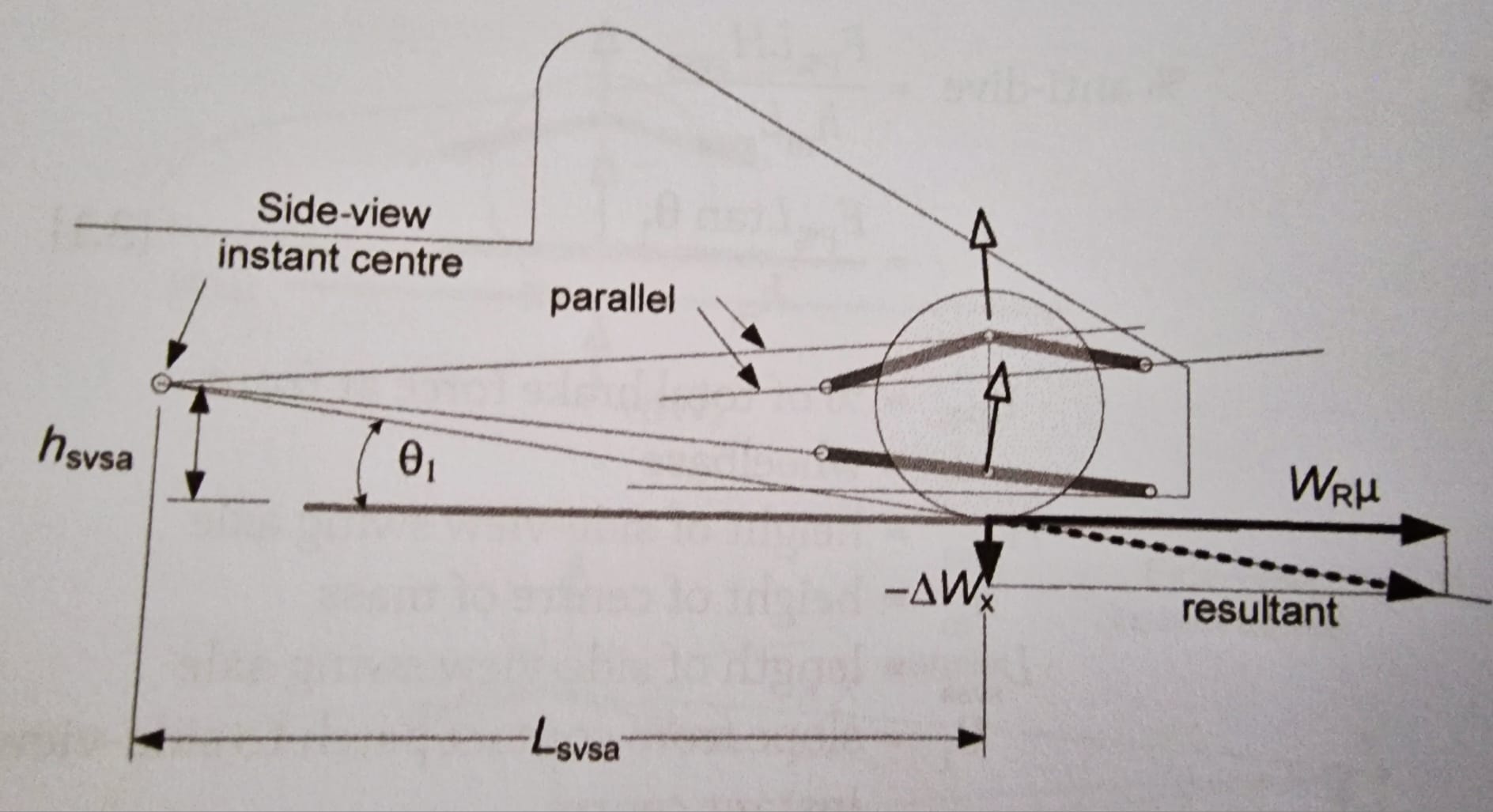
Anti-Lift Geometry
Designed to resist rear-end lift under braking, anti-lift suspensions redirect a portion of the braking force vertically downward via strategically inclined wishbones. This helps maintain consistent floor height and prevents sudden shifts in aerodynamic balance — especially critical during corner entry.
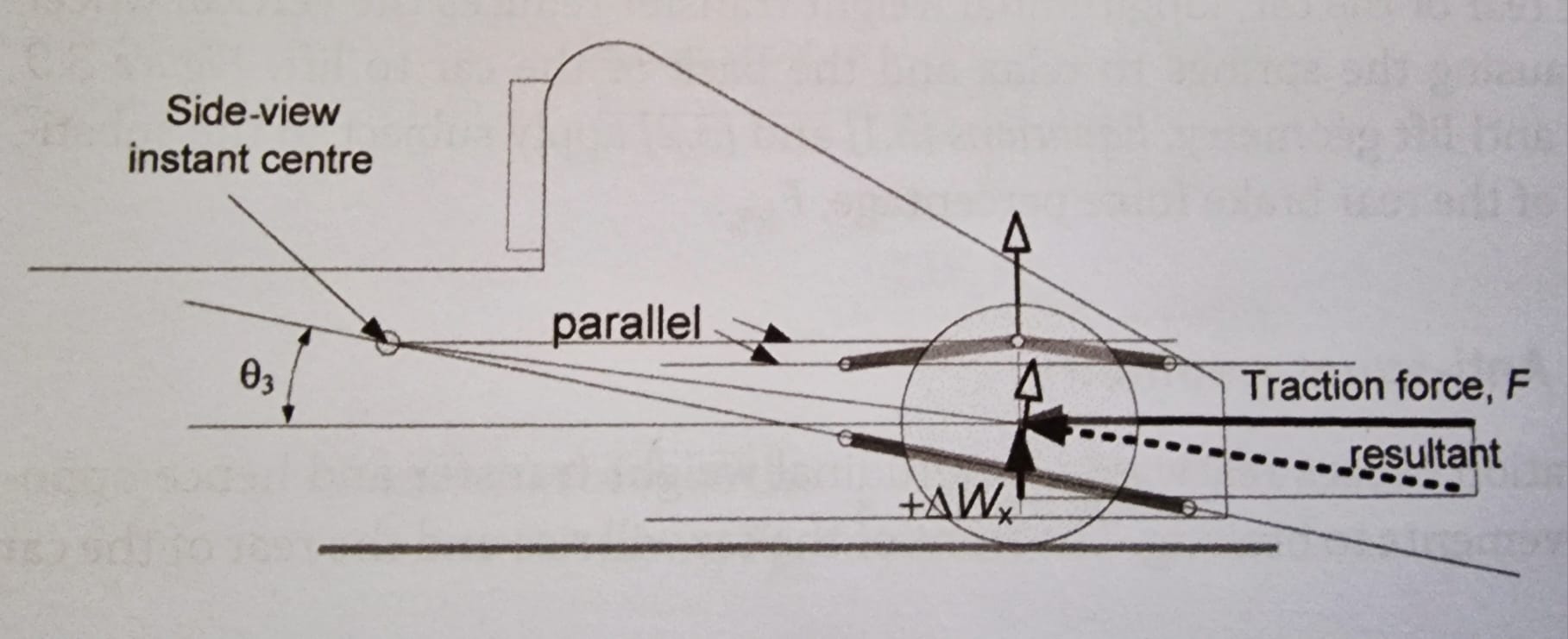
Anti-Squat Geometry
This concept counters rear compression under acceleration. By realigning suspension forces upward through the chassis, anti-squat setups help maintain optimal rear ride height, stabilizing the floor and improving traction. Both geometries are achieved through careful adjustment of wishbone angles and positions.
However, over-aggressive anti-geometry can reduce suspension compliance, impacting mechanical grip, comfort over bumps, and even traction out of corners.
Ferrari’s Change: Lower Wishbone, Higher Stability
By lowering the front upper wishbone at the rear, Ferrari likely targeted:
- A shift in the instantaneous center of rotation, improving control under longitudinal loads;
- Increased anti-lift geometry, reducing rear pitch during braking;
- A more stable ride height under load to keep ground effect consistent;
- Potential anti-squat benefits, aiding traction under throttle.
However, such aggressive geometries may compromise mechanical compliance, potentially reducing grip over bumps and affecting driver feel — a key tradeoff the team must manage.
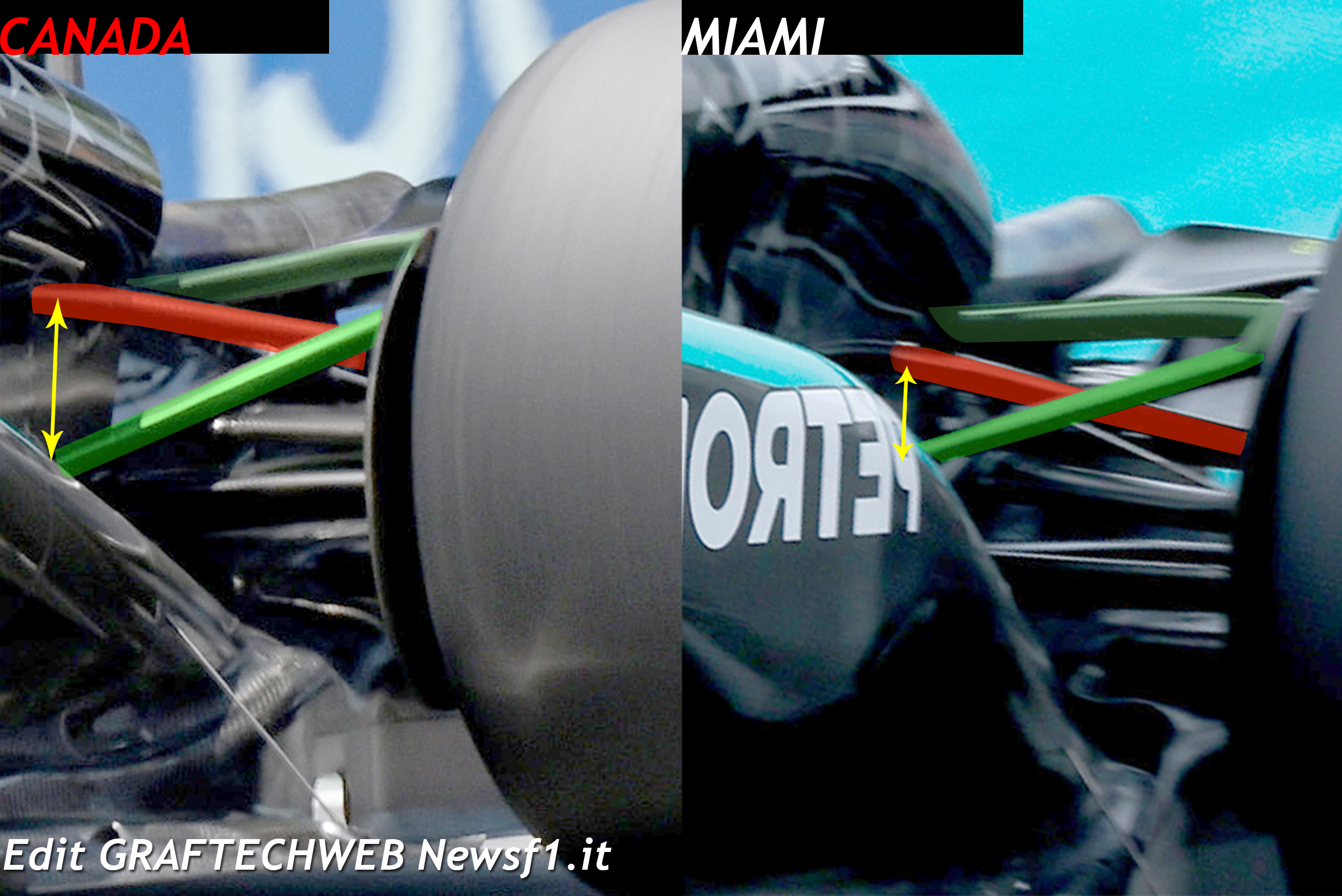
Mercedes’ Similar Move: Same Problem, Shared Philosophy
Mercedes made a similar change at Imola, modifying their rear suspension by tilting the upper wishbone more aggressively. Their goals mirrored Ferrari’s:
- Improve aero consistency under braking;
- Limit rear-end lift to stabilize floor performance.
Both teams are converging on a shared understanding: in the ground effect era, suspension is an aerodynamic tool. Managing pitch and ride height isn’t just about handling — it’s about extracting consistent downforce.
The Floor Drives Suspension Evolution
Since the 2022 regulation shift, the floor has become the primary downforce generator. Its performance depends on millimetric control of ride height. A more rigid suspension geometry (anti-lift/anti-squat) improves:
- Pressure stability beneath the car;
- Diffuser flow consistency;
- Rear-end aero balance.
Ferrari’s setup responds to these needs: by limiting pitch in braking zones, they aim to protect the floor’s pressure profile, aiding predictability and tire management. The SF-25’s evolution continues, with Spa likely to offer real performance data.